
Excessive gland load
Too much compression reduces leakage and increases rubbing friction at the shaft or sleeve.
Look for a temperature rise that follows tightening.TROUBLESHOOTING GUIDE
When a stuffing box runs hot, friction is creating more heat than the packing system can remove. Over-tight adjustment is common, but flush, sleeve and material problems can produce the same symptom.
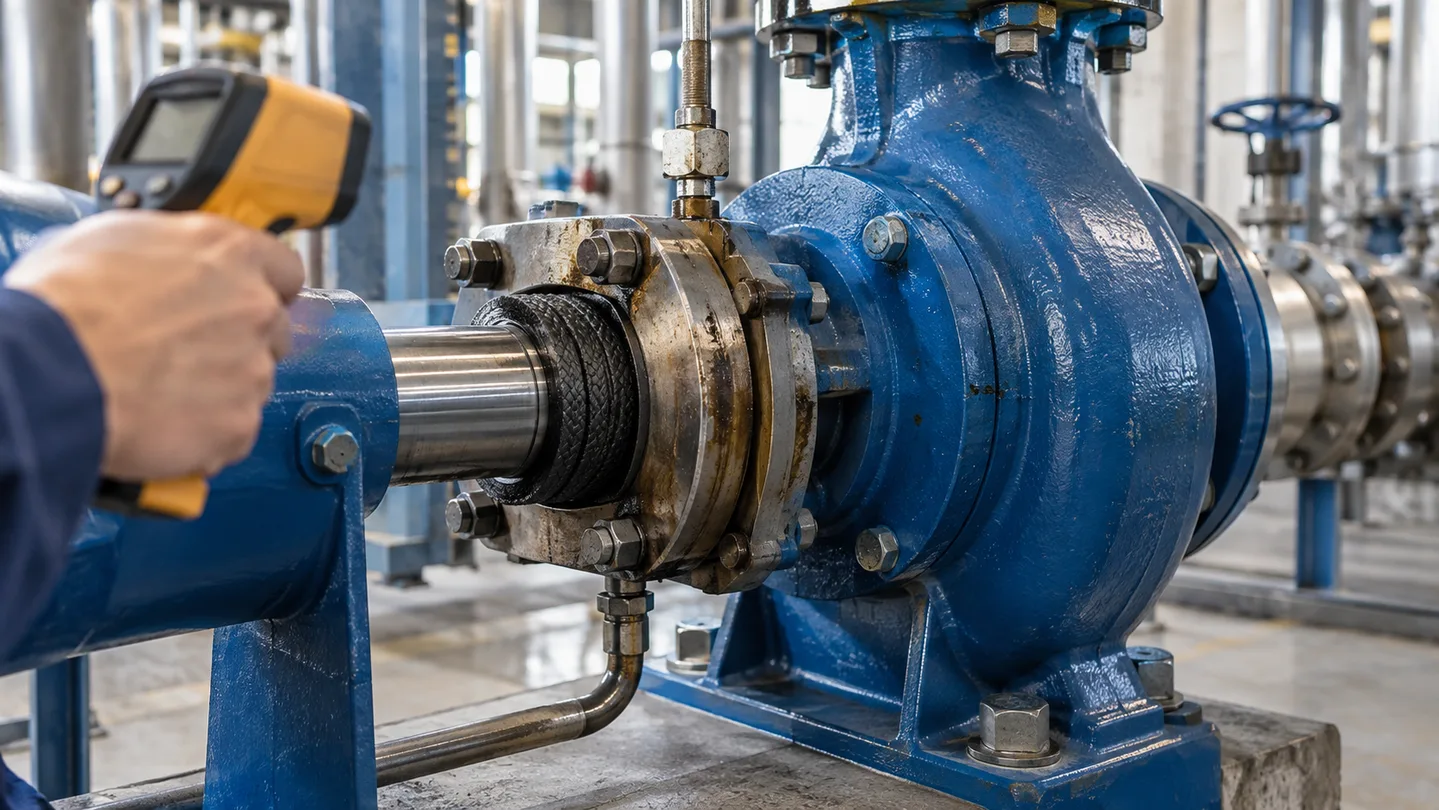
QUICK ANSWER
Packing generates friction at the rotating shaft or sleeve. That heat has to be controlled by leakage, flush liquid, the pumped fluid or a combination of those paths. When the stuffing box becomes abnormally hot, friction is higher than the cooling and lubrication available at the interface.
The most common cause is excessive gland load after an attempt to reduce leakage. Other causes include a blocked flush, a lantern ring that no longer communicates with the port, damaged sleeve surfaces, shaft runout and a packing material that does not fit the actual speed, chemistry or temperature.
Continued operation at abnormal temperature can glaze or harden the packing, reduce resilience and score the sleeve. That damage often leads to the next leakage complaint.
ROOT CAUSES
Too much compression reduces leakage and increases rubbing friction at the shaft or sleeve.
Look for a temperature rise that follows tightening.A blocked line, dirty supply or misplaced lantern ring can prevent cooling fluid from reaching the ring set.
An open flush valve does not prove the packing is receiving flow.Actual surface speed, pressure, chemistry or temperature may exceed what the installed packing can tolerate.
Suspect this when heat repeats after correct installation and hardware checks.Grooved sleeves, runout or a cocked follower create concentrated rubbing and local heat.
Uneven temperature around the box is a strong clue.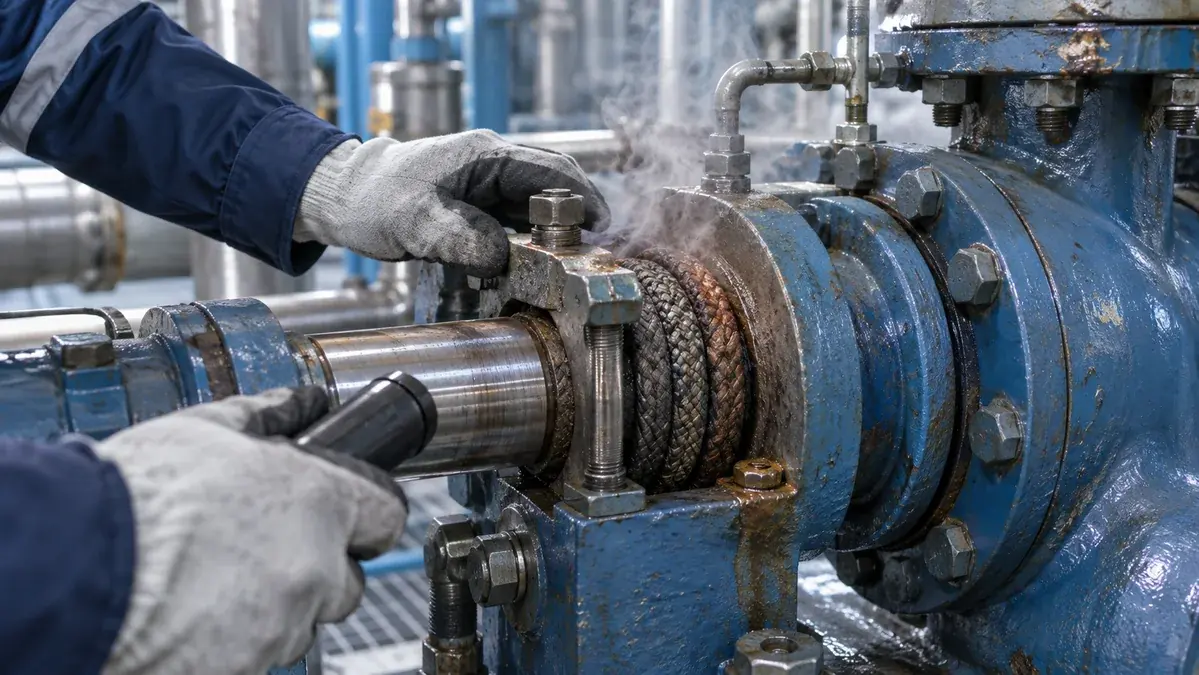
TEMPERATURE CHECK
Maximum allowable temperature depends on both the packing material and the pump. Measure at the same location each time and compare the reading with process temperature and the application limit. A stable reading within those limits is different from a temperature that continues to rise after adjustment.
| Temperature behavior | What it suggests | What to verify | Interpretation |
|---|---|---|---|
| Rises during run-in, then stabilizes | Normal bedding-in may be occurring | Leakage, flush and the exact packing/OEM guidance | Acceptable only if the final temperature remains stable and within the defined limits |
| Keeps rising after each gland adjustment | Excessive compression or loss of lubrication/cooling | Follower load, leakage and flush continuity | Abnormal; do not keep tightening |
| Much hotter than the process liquid | Frictional heat is dominating the interface | Gland load, surface speed, sleeve condition and material selection | Some general guidance uses roughly 50°F (28°C) above process temperature as a monitoring reference, not a universal limit |
| High temperature on an application-specific graphite packing | Certain designs intentionally conduct substantial heat to the gland area | The exact pump and packing instructions | Application-specific limits can be much higher than generic rules, so the OEM/material limit takes priority |
ACTION SEQUENCE
Confirm whether the whole gland is hot or the temperature is concentrated on one side.
Review what changed immediately before the heat appeared. A temperature rise after tightening points first to gland load.
Restore controlled leakage or flush flow before adding any more compression. Do not respond to a hot box by tightening the gland further.
If heat returns after the load and flush are corrected, inspect the sleeve, shaft movement, follower and removed-ring condition.
Reassess packing material only after hardware, installation and actual duty have been checked.
COMMON QUESTIONS
Common causes are excess gland load, too little leakage, lost flush, wrong packing for the duty or mechanical defects such as sleeve grooves and runout.
Start with what changed just before the temperature rise.No. Over-tightening is common, but blocked flush, a misplaced lantern ring, damaged sleeve or material mismatch can produce similar heat.
Read temperature and leakage together.If heat rose after tightening and leakage became very low, reduce load only in small controlled steps while restoring cooling and following the equipment procedure.
Do not make a large corrective movement.Yes. Sustained heat can harden or glaze packing, shorten ring life and score the shaft sleeve.
Continued overheating can score the sleeve and increase the repair scope.A continuing temperature rise matters more than one isolated reading. Restore leakage or flush cooling first, then compare the stabilized temperature with the limits for the actual packing material and pump.